
> Bending the Curve of the Grassland Butterfly Index

Home / Butterflies & Moths / > Bending the Curve of the Grassland Butterfly Index
Bending the Curve of the Grassland Butterfly Index

Grassland is an important habitat for butterflies and many other pollinating insects. Over half of the 501 European butterflies use grasslands as one of their main habitats.

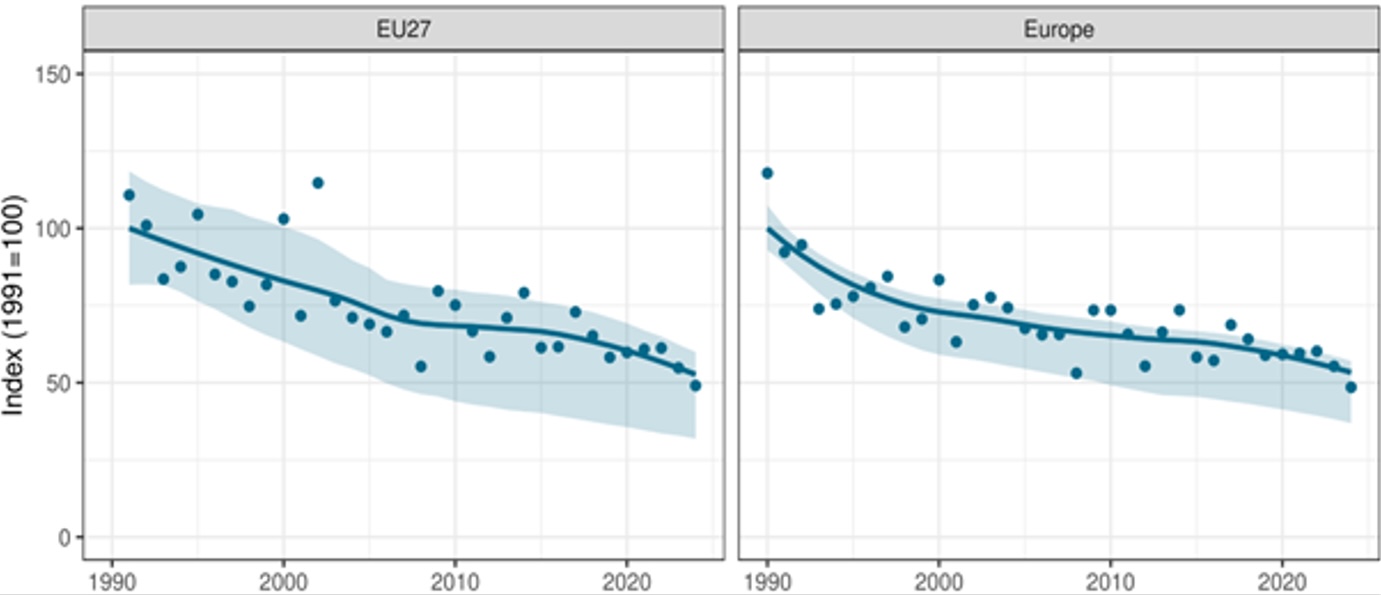
The Grassland Butterfly Index has been adopted by the EU as a key measure of progress towards the target of halting biodiversity loss, restoring nature in agro-ecosystems and reversing the decline in pollinators by 2030, but the index has declined by almost 50% between 1990-2024.

BCE

Reversing the decline of butterflies and other insects in grassland habitats is therefore a vital component to help meet the EU targets laid out in the Pollinator Initiative, the Biodiversity Strategy 2030 and the Nature Restoration Regulation.

A key question is therefore: How can EU Member States 'Bend the Curve' in an upwards direction to indicate growing butterfly populations. Butterfly Conservation Europe and Dutch Butterfly Conservation have produced a report to give guidance on how this can be achieved with examples of best practice from around Europe. The following is a summary of the full report which can be read here.

  1. The main reasons for the decline of butterflies on grassland are habitat loss due to conversion to cropland, or habitat deterioration due to unsuitable management or abandonment. However, research has shown that declines can be halted and reversed in grasslands and arable landscapes, given the appropriate management.
  2. When a Member State chooses to use the Grassland Butterfly Index (GBI) as one of the three indicators under Article 11 of the Nature Restoration Regulation (NRR), it must within its Nature Restoration Plans 'put in place measures which shall aim to achieve an increasing trend at national level'.
  3. We outline how Member States can establish a monitoring programme to produce a high quality GBI, including appropriate quality control and investment in a paid coordinator to build and maintain the monitoring network. This network of national coordinators underpins the strength and breadth of European Butterfly Monitoring Scheme (eBMS), while harmonised protocols and collaborative data synthesis offer a unique tool for measuring progress towards conservation and restoration targets.
  4. Finally, this report gives information on how an effective management approach can help to halt and reverse the decline of butterflies, both on grasslands and arable land (where several species live), and thereby 'Bend the Curve' of the GBI in a positive direction.
  5. We make the following general recommendations to benefit butterflies:
    - Manage at the landscape scale - Maintain low-intensity pastoral systems
    - Manage for increasing diversity - variety of species
    - Avoid uniform management (especially in hay meadows)
    - Maintain habitat mosaics
    - Prevent desiccation and drainage in wet meadows
    - Reduce nitrogen deposition and pesticide use
    - Implement targeted measures for specialist butterflies in the GBI â?¢ Ensure landscape connectivity (maintaining and restoring ecological corridors such as roadside verges and railway embankments to support dispersal and metapopulation dynamics)
    - Monitor the results and engage in adaptive management
  6. On farmland we recommend:
    - Start with a farm assessment to identify existing areas of value and opportunities for enhancement
    - Enhance existing semi-natural habitats
    - Manage field boundaries to create diverse structures with hedges and ditches around the farm
    - Create flower-rich areas, such as permanent wildflower margins, meadows and 'butterfly banks'
    - Implement sympathetic farming practices, such as strongly reducing use of pesticides, herbicides, and fungicides
    - Connect habitats by linking them with habitat corridors to allow wildlife movement
    - Monitor the results and identify future enhancements based on experience on your farm
BCE

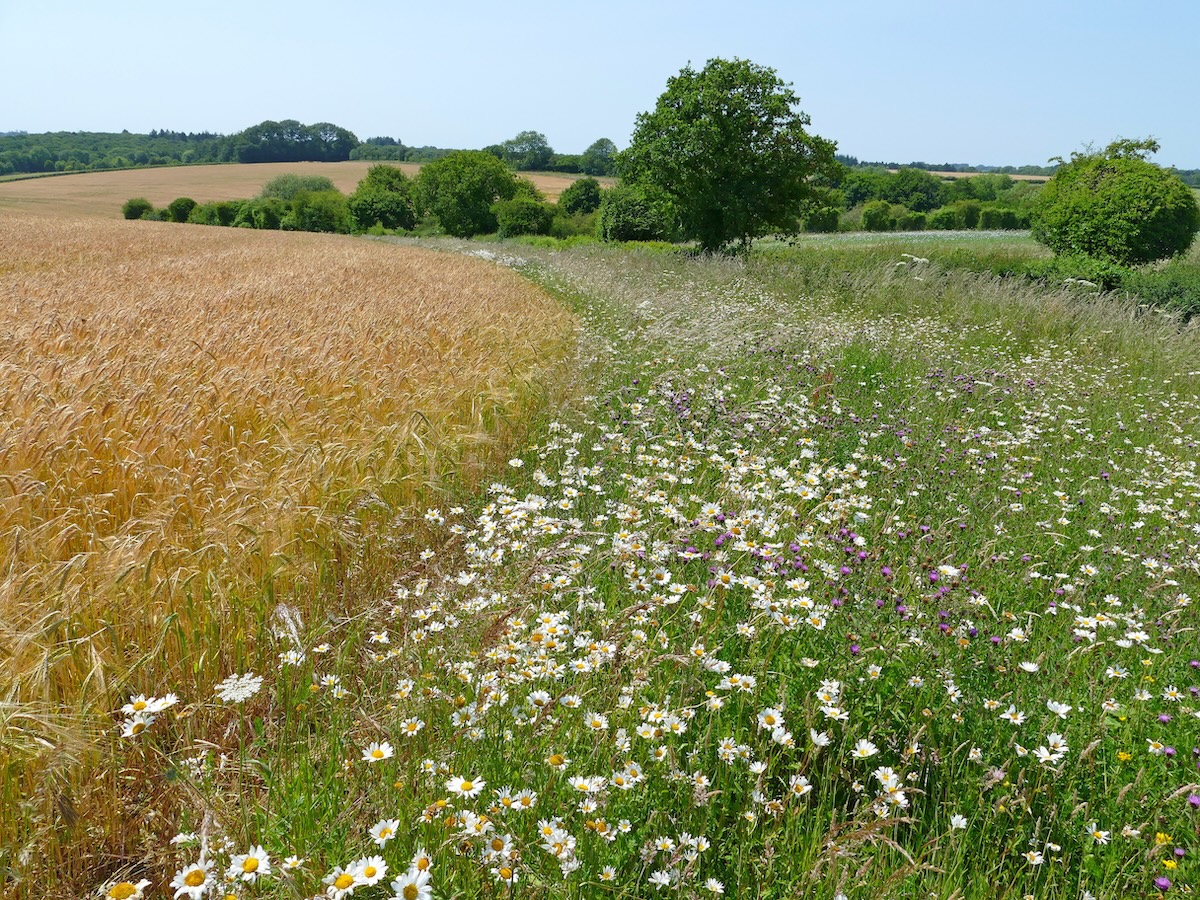
Field margins with wildflowers can provide crucial breeding areas for butterflies and beneficial insects

BCE

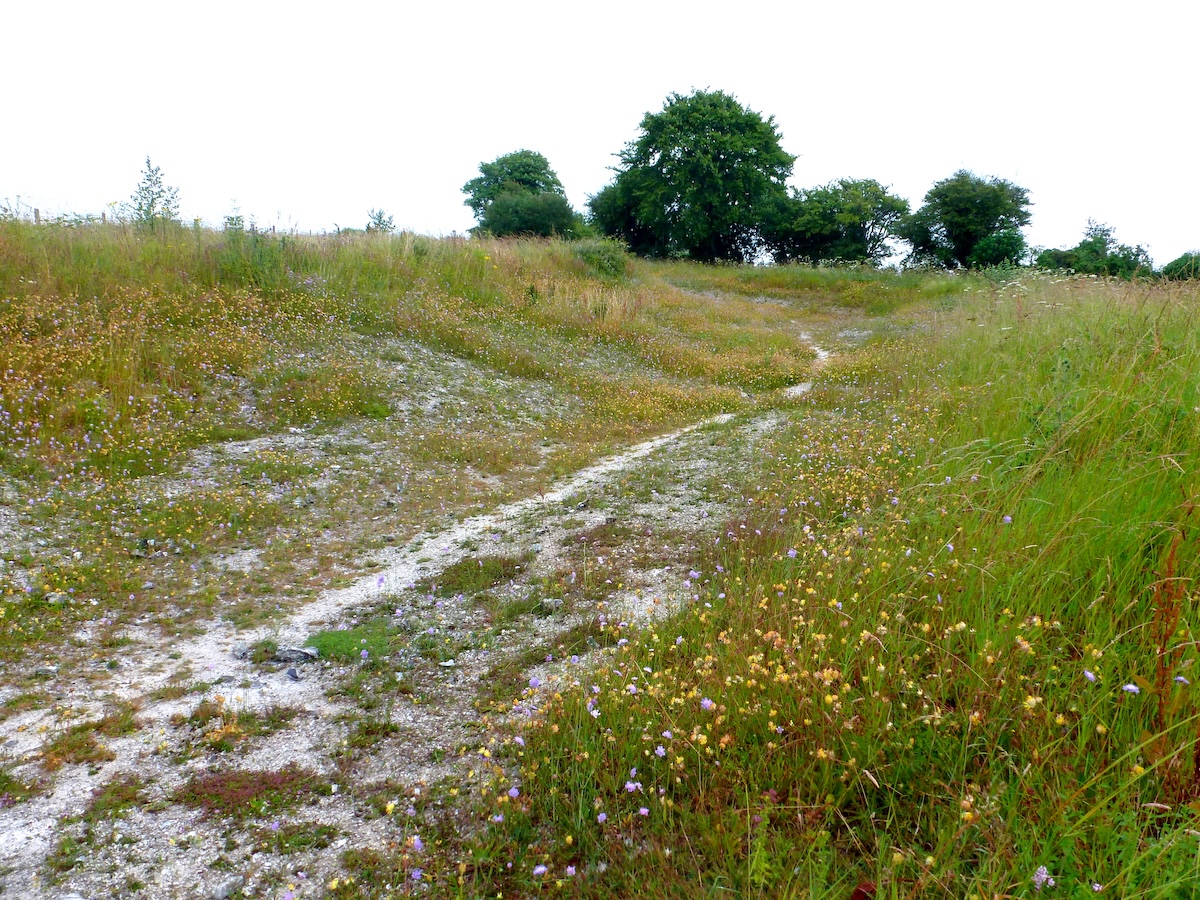
A butterfly bank can provide breeding habitats for many butterflies